Guide

How to Switch to Time-of-Use Rates and Actually Save Money

By Ryan Mitchell October 31, 2025 5 min read
How to Switch to Time-of-Use Rates and Actually Save Money The letter came in a small envelope. Not the bill. A notice. “Your utility is transitioning to Time-of-Use rates. You may opt out by December 15.” I almost threw it away. I am glad I did not. The Time-of-Use Rate Comparator can help you decide if switching is worth it.
Time-of-Use Rate Comparator
Enter your hourly usage pattern — see whether a TOU plan saves or costs you money.
All data stays in your browser — we never see it.
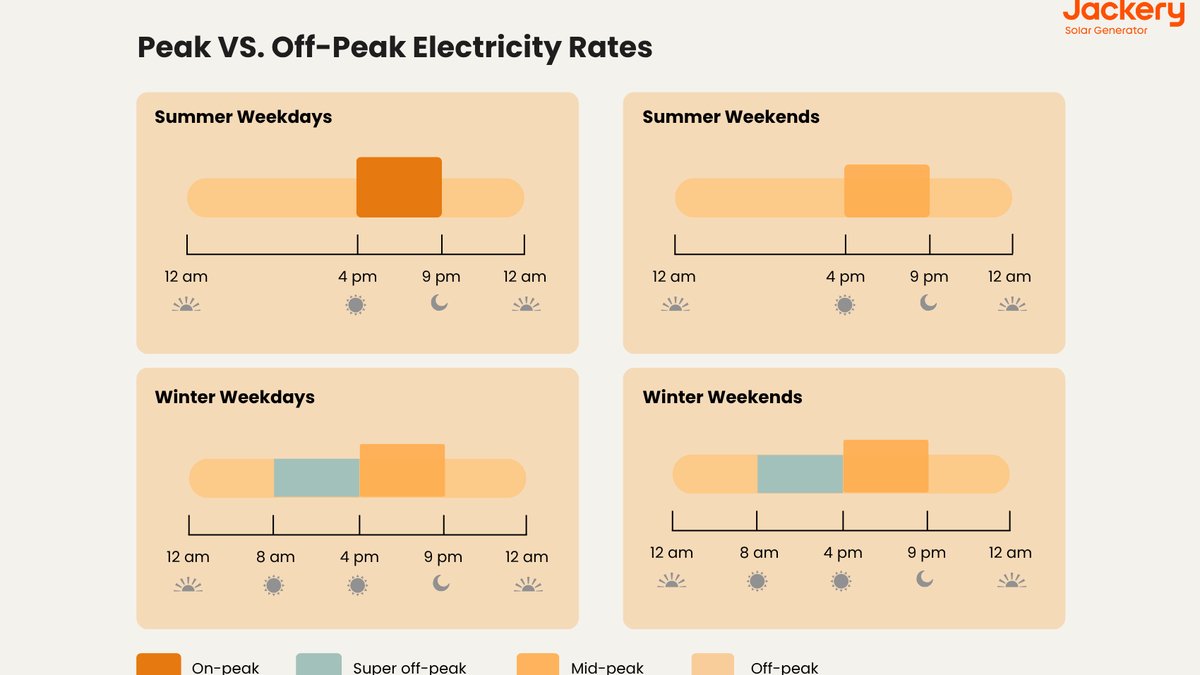
Time-of-Use rates are not a scam. But they are not a gift. The monopoly offers them because they want you to shift your usage away from peak hours. Peak hours are when the grid is stressed. Usually 2 PM to 7 PM in summer. The monopoly pays high prices for power during those hours. They want you to pay less during off-peak and more during peak. Let me break down the numbers. My utility’s flat rate was 20¢/kWh. Their TOU rate was 30¢/kWh peak (2 PM to 7 PM), 10¢/kWh off-peak (7 PM to 2 PM next day). If I could shift 30% of my usage to off-peak, I would save money. If I shifted none, I would pay more. The Electric Bill Estimator can show you your current baseline.
💰
Electric Bill Estimator
Enter your zip code, home size, and usage — see estimated monthly and seasonal costs.
All data stays in your browser — we never see it.
I downloaded my hourly usage data from the utility portal. It was a CSV file. I opened it in Excel. I saw my usage pattern. From 9 AM to 5 PM, I was at work. My AC was set to 80°F. My usage was low. From 5 PM to 9 PM, I was home. My AC was set to 74°F. My usage was high. That is exactly the peak window. The monopoly wanted me to shift my AC usage to off-peak. I could not shift my AC. I work from home two days a week. On those days, I need AC during peak hours. But I could shift my other appliances. Dishwasher, laundry, pool pump, EV charging. The Smart Thermostat Savings Estimator helped me program my AC to pre-cool before peak.
🌡️
Smart Thermostat Savings Estimator
Enter your thermostat settings and home size — see estimated savings from programmed setbacks.
All data stays in your browser — we never see it.

I set my thermostat to pre-cool at 1 PM to 73°F. Then from 2 PM to 7 PM, I let it drift to 78°F. That used the cheaper off-peak electricity in the early afternoon and avoided the expensive peak hours. My fiancée did not love 78°F. I bought her a fan. This is the math from my first month on TOU. My total usage was 1,400 kWh. 400 kWh during peak, 1,000 kWh during off-peak. My bill was 400 times 30¢ equals $120, plus 1,000 times 10¢ equals $100. Total $220. Under the flat rate, 1,400 times 20¢ would have been $280. I saved $60. That equals a 21% reduction. The Appliance Cost Calculator helped me identify the loads I could shift. I shifted my dishwasher to 9 PM. I set the delay start. It runs from 9 PM to 10 PM. Off-peak. I saved 1.8 kWh per day times 10¢ difference equals 18¢ a day. $5.40 a month. Not huge, but real. I shifted my laundry to weekends. On Saturday, I run the washer and dryer before 2 PM. Off-peak. The dryer uses 3 kWh. Washer uses 0.5 kWh. Saved 3.5 kWh per load times 10¢ difference equals 35¢ per load. 4 loads a month saved $1.40. Again, small. But everything adds up. My pool pump was the big win. I ran it from 9 AM to 1 PM. Off-peak. It used 6.6 kWh a day. At flat rate, that cost $1.32 a day. At TOU, it cost 66¢ a day. Savings 66¢ a day. $20 a month. $240 a year. The Solar ROI Calculator is for solar, but I used it to see if a battery would help me shift even more load. If I had a battery, I could charge it at night at 10¢/kWh and run my AC during peak at 30¢/kWh. The savings would be 20¢ per kWh shifted. I need about 10 kWh of storage to cover my evening AC. A 10 kWh battery costs $8,000 installed. The annual savings would be 10 kWh times 365 days times 20¢ equals $730 a year. Payback 11 years. Not great. But battery prices are dropping. By 2030, the payback might be 7 years. My friend Mark switched to TOU after his delivery charge shock. He works from home full time. He cannot shift his AC. He ran the Time-of-Use Rate Comparator and found that TOU would cost him $30 more a month. He opted out. He stayed on the flat rate. The Home Energy Score Calculator can help you decide if your home is ready for TOU. Look at your action plan for TOU rates. To startdownload your hourly usage data. Most utilities have a portal. Look for “green button data” or “interval data.” It is a CSV file. Open it. See when you use the most energy. Next upcalculate your cost under TOU. Use the Time-of-Use Rate Comparator. Enter your peak and off-peak usage. See if you save. Thenif you save, switch. If you do not, shift what you can. Dishwasher, laundry, pool pump, EV charging. Then run the comparator again. Alsoconsider pre-cooling. Set your thermostat to lower the temperature before peak hours. Then let it drift. You will use cheaper electricity before peak and less expensive electricity during peak. Finallymonitor your first three bills closely. TOU can surprise you. If you are not saving, opt out. Some utilities let you switch back. The monopoly does not want you to understand TOU. They want you to accept the default. They want you to be confused. Do not let them. I have been on TOU for 14 months. I have saved $720. That comes to a new smart thermostat, a smart power strip, and a Kill-A-Watt meter. Plus dinner out. Watt and Volt do not care about time-of-use. They sleep when they want. They eat when they want. They knock things off tables whenever. I care. My bill is lower. The monopoly gets less. That works out to a win.
Ryan Mitchell

Ryan Mitchell

Independent energy auditor in Austin, Texas. 600+ home audits. Solar homeowner since 2021. I build calculators that expose exactly where your money goes. Two cats named Watt and Volt.