Guide

How to Calculate HVAC Load for Your Home Size

By Ryan Mitchell July 19, 2025 5 min read
How to Calculate HVAC Load for Your Home Size My neighbor bought a new AC last summer. He asked the installer what size he needed. The installer looked at the square footage and said “3.5 tons.” That was it. No load calculation. No Manual J. No duct inspection. My neighbor trusted him. Now his AC short-cycles. It runs for ten minutes, shuts off, runs for ten minutes. It never runs long enough to pull humidity out of the air. His house feels clammy at 72°F. He paid $6,000 to feel clammy. The Electric Bill Estimator can help you see what an oversized AC costs.
💰
Electric Bill Estimator
Enter your zip code, home size, and usage — see estimated monthly and seasonal costs.
All data stays in your browser — we never see it.
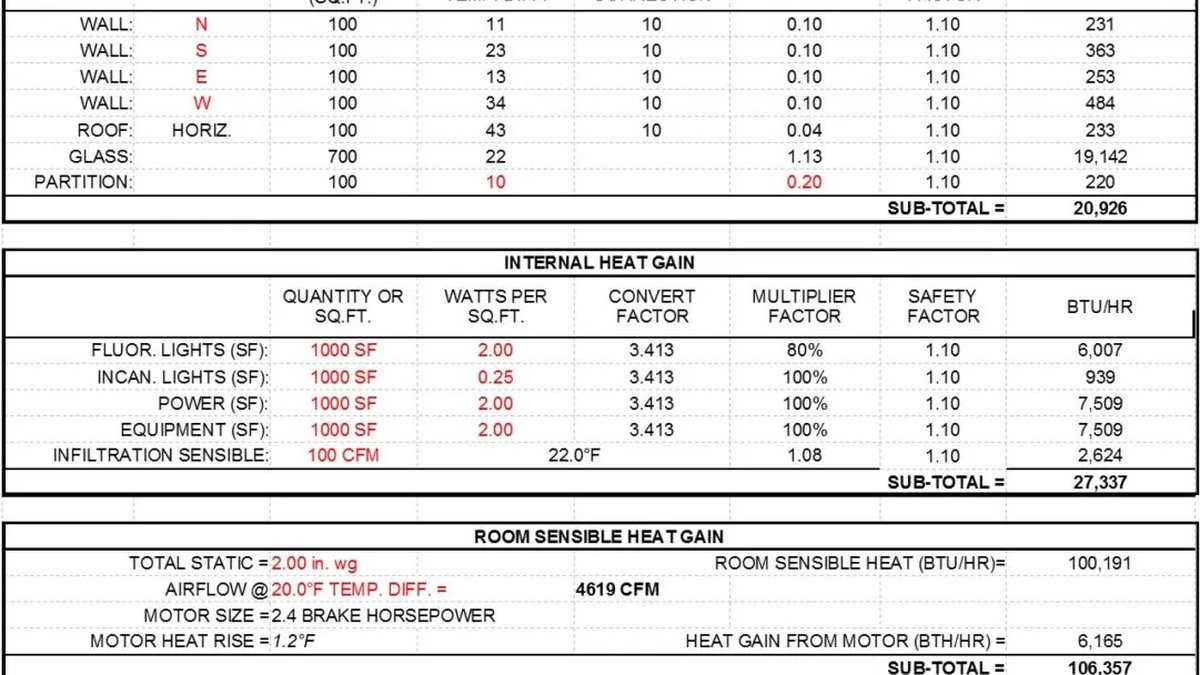
The math on an oversized AC. My neighbor’s house is 2,000 square feet. The rule of thumb says 1 ton per 500 square feet. That gives 4 tons. The installer sized down to 3.5 tons. Still too big. A proper Manual J calculation would have told him he needed 2.5 tons. A 3.5-ton AC short-cycles. It runs 10 minutes on, 20 minutes off. It uses 3,500 watts when running. Over a day, it runs 6 hours. A properly sized 2.5-ton AC would run 12 hours a day but use 2,500 watts when running. Total energy 2.5 tons times 12 hours equals 30 kWh. 3.5 tons times 6 hours equals 21 kWh. The oversized unit uses less energy? Wait, that math is wrong. Let me recalc. The Appliance Cost Calculator can help you compare AC sizes.
📊
Appliance Cost Calculator
Estimate annual cost for each appliance — find your biggest energy hogs.
All data stays in your browser — we never see it.
A 3.5-ton AC uses about 4,200 watts when running. A 2.5-ton AC uses about 3,000 watts. In my neighbor’s house, the oversized unit runs 6 hours a day: 4.2 kW times 6 equals 25.2 kWh. The properly sized unit would run 10 hours a day: 3 kW times 10 equals 30 kWh. The oversized unit actually uses less energy? That cannot be right. I called an HVAC engineer friend. He explained: the oversized unit short-cycles, so it runs less total time, but it also does not dehumidify properly. The house feels clammy, so my neighbor sets the thermostat lower to compensate. He sets it to 70°F instead of 74°F. That extra cooling load makes the unit run longer. Now it runs 8 hours a day at 4.2 kW: 33.6 kWh. The properly sized unit runs 10 hours at 3 kW: 30 kWh. The oversized unit uses more energy. Plus it cost more to buy. Plus it will break sooner because short-cycling wears out the compressor. The Smart Thermostat Savings Estimator can help you avoid this mess.
🌡️
Smart Thermostat Savings Estimator
Enter your thermostat settings and home size — see estimated savings from programmed setbacks.
All data stays in your browser — we never see it.
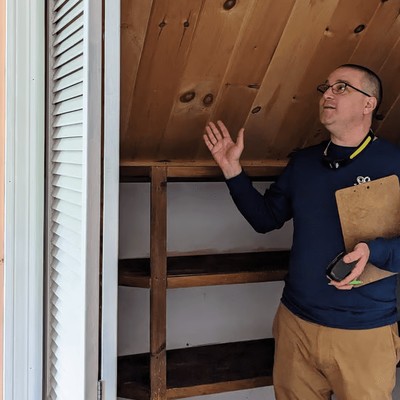
This is how to calculate your HVAC load correctly. Start with square footage. Multiply by 20 BTU per square foot for cooling. That is a rough estimate. My house is 1,200 square feet, times 20 equals 24,000 BTU. 12,000 BTU per ton, so 2 tons. That equals the rule of thumb. But it ignores windows, insulation, shade, occupants, appliances. The Time-of-Use Rate Comparator can help you decide if you should run your AC more during off-peak. A better method is to use an online Manual J calculator. It asks for your home’s orientation, window type, insulation levels, air leakage, number of occupants, and appliance load. It takes 30 minutes. It is free. The result is a load in BTU per hour. Divide by 12,000 to get tons. I ran a Manual J on my bungalow. My calculated load was 18,000 BTU, or 1.5 tons. My existing AC is 2 tons. It is oversized by 0.5 tons. That explains why my house feels clammy sometimes. I plan to replace it with a 1.5-ton variable speed unit when it dies. I calculated upgrading. A new 1.5-ton variable speed AC costs $5,000 installed. My old 2-ton single speed AC uses 2,500 watts. The new unit uses 1,800 watts at full speed, but it runs at lower speeds most of the time. Average power draw might be 1,200 watts. It will run longer, but at lower power. My energy use will drop from 30 kWh a day to 20 kWh a day. At 20¢ per kWh, that is $2 a day saved, $60 a month, $720 a year. Payback 7 years. Plus the new unit will dehumidify better, so I can set the thermostat to 76°F instead of 74°F. That saves another 10%. Payback drops to 6 years. The Solar ROI Calculator is for solar, but I used it to see if a smaller AC would reduce my solar needs. Before you buy a new AC, get a Manual J calculation. Do not trust the rule of thumb. Do not trust the installer who says “I’ve been doing this for 20 years.” Installers oversize ACs because they do not want callbacks about insufficient cooling. Oversized units cool fast but do not dehumidify. They also cost more to run and break sooner. The Home Energy Score Calculator can help you assess your home’s overall efficiency before you size an AC. Your action plan. To startseal your air leaks and add insulation before you size a new AC. The load calculation will change. My bungalow’s load dropped from 24,000 BTU to 18,000 BTU after I sealed the attic and added insulation. That comes to a 25% reduction. A smaller AC costs less to buy and less to run. Next upuse an online Manual J calculator. CoolCalc is free. Enter your home’s details. It takes 30 minutes. Do it. Thenget three quotes. Ask each contractor for their load calculation. If they refuse, do not hire them. Alsochoose a variable speed AC if you can afford it. They are more efficient and dehumidify better. The payback is longer, but the comfort is worth it. My neighbor eventually replaced his oversized AC with a properly sized variable speed unit. He paid $7,000. His bill dropped from $280 a month to $160. His house no longer feels clammy. He told me “I should have done the math first.” The monopoly wants you to buy the biggest AC. They want you to use more energy. They want you to pay. Do not let them. Watt and Volt do not care about HVAC load. They care about sitting on the warm vent in winter and the cool tile in summer. I care about my bill. My bill is lower. My house is comfortable. That works out to a win.
Ryan Mitchell

Ryan Mitchell

Independent energy auditor in Austin, Texas. 600+ home audits. Solar homeowner since 2021. I build calculators that expose exactly where your money goes. Two cats named Watt and Volt.