Guide

10 Signs Your Home Is Leaking Energy (And Money)

By Ryan Mitchell December 15, 2025 5 min read
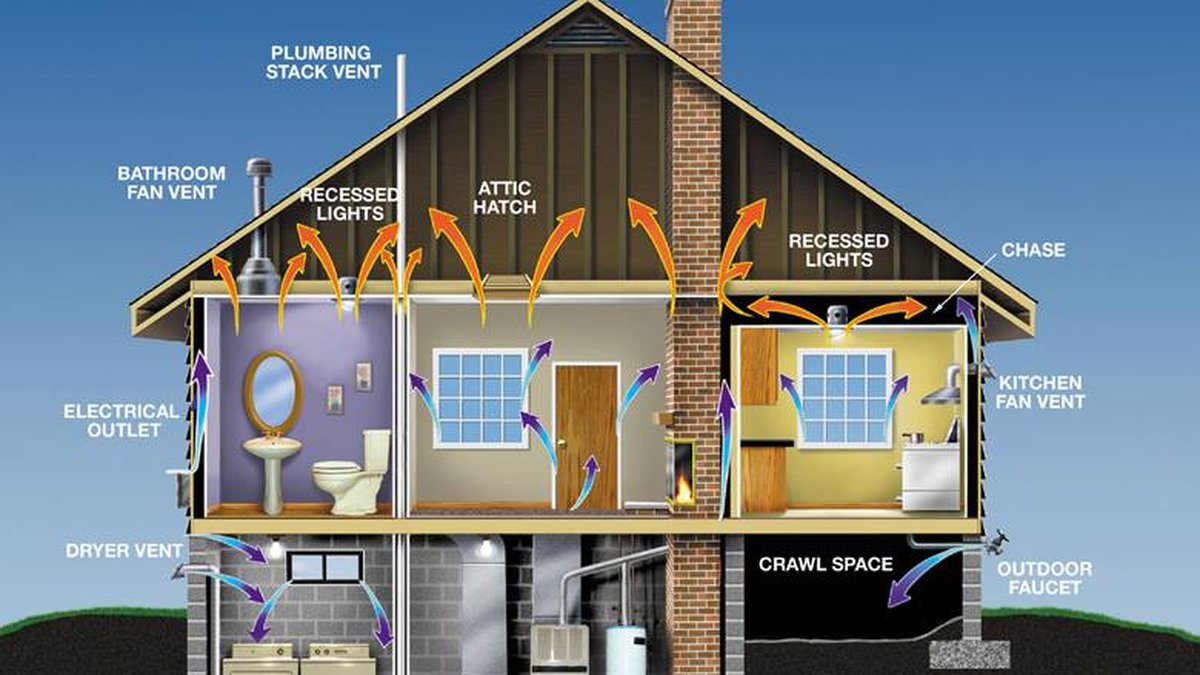
10 Signs Your Home Is Leaking Energy (And Money) I walked into my friend’s house last winter. It was 68°F outside. Inside, it was 62°F. His heater was running. I could feel cold air blowing from the windows. I held my hand near the front door. A draft. I lit an incense stick and walked around. The smoke danced at every window, every door, every outlet. His house was a sieve. He was heating the neighborhood. The Home Energy Score Calculator can help you find your own leaks.
🏠
Home Energy Score Calculator
Answer 20 questions about your home — get a 1-10 score and prioritized upgrade list.
All data stays in your browser — we never see it.
Here are ten signs your home is leaking energy. I have seen them all in my 600 audits. If any of these sound familiar, you are losing money. The Electric Bill Estimator can help you calculate how much those leaks cost.
💰
Electric Bill Estimator
Enter your zip code, home size, and usage — see estimated monthly and seasonal costs.
All data stays in your browser — we never see it.
The first sign: Your heating or cooling runs constantly. My friend’s heater ran 18 hours a day. His house never reached the set temperature. The thermostat was set to 68°F, but the house stayed at 62°F. The heater was fighting a losing battle. The leaks were winning. After we sealed the windows and doors, his heater ran 8 hours a day. He saved $200 a month. The second sign: You have high humidity in summer. When your AC short-cycles, it does not run long enough to remove humidity. Your house feels clammy. You set the thermostat lower. The AC runs even more. It is a vicious cycle. The fix is not a new AC. The fix is sealing leaks and adding insulation. My neighbor had this problem. He sealed his attic bypasses. His humidity dropped from 65% to 50%. He raised his thermostat from 72°F to 74°F. He saved $50 a month. The Appliance Cost Calculator can help you find the energy hogs that make your AC work harder.
📊
Appliance Cost Calculator
Estimate annual cost for each appliance — find your biggest energy hogs.
All data stays in your browser — we never see it.
The third sign: Ice dams on your roof in winter. Ice dams form when heat escapes from your attic, melts snow on the roof, and the water refreezes at the eaves. That means your attic insulation is insufficient. I saw this in a house in Cedar Park. The owners added R30 insulation. The ice dams stopped. Their heating bill dropped 20%. The fourth sign: Drafts around windows and doors. The incense stick test never lies. Light one on a windy day. Hold it near your windows, doors, baseboards, and electrical outlets. If the smoke moves horizontally, you have a leak. Seal it with caulk or weatherstripping. I sealed 12 leaks in my house. Cost $20. Saved $100 a year. The Smart Thermostat Savings Estimator can help you program around drafts. The fifth sign: Dust near outlets and baseboards. Dust means air is moving. Air is moving because there is a leak. The gap around electrical outlets on exterior walls is a common leak. I installed foam gaskets behind every outlet cover on exterior walls. Cost $5. Saved $30 a year. The sixth sign: Your attic is hot in summer. On a sunny August day, my attic was 140°F. That is normal. But if your attic is 150°F or more, your ventilation is poor. Add ridge vents or a solar attic fan. My neighbor added a solar fan. His attic temperature dropped to 130°F. His AC load dropped 10%. The seventh sign: Your floors are cold in winter. If you have a crawlspace, the floor above it will be cold. The fix is crawlspace insulation and sealing vents. I added R19 fiberglass batts under my floor. Cost $200. Saved $100 a year. My feet thanked me. The Time-of-Use Rate Comparator can help you shift your heating load to off-peak. The eighth sign: Your water heating costs are high. If your water heater tank is warm to the touch, it is losing heat. Add an insulation blanket. Cost $30. Save $20 a year. Set the temperature to 120°F. That saves another $15 a year. Insulate the first six feet of hot water pipe. Cost $10. Save $5 a year. The ninth sign: Your AC runs constantly but your house is not cool. This could be low refrigerant, dirty coils, or a leaking duct. I had a client with a refrigerant leak. His AC ran 16 hours a day. The technician fixed it for $250. His AC now runs 8 hours a day. He saved $100 a month. The Solar ROI Calculator can help you see if solar would offset your AC load. The tenth sign: Your bills are increasing despite the same usage. This is the most common sign. Your usage is flat, but your bill is up. That means rates went up. You cannot control rates. You can control usage. The more you save, the less rate hikes hurt. In 2026, Austin Energy raised rates by 6%. My usage dropped by 15%. My net bill went down. I beat the hike. The monopoly wants you to ignore these signs. They want you to keep leaking. They want you to pay. Do not let them. Your action plan. To startdo the incense stick test. Find your leaks. Seal them. Next upcheck your attic insulation. If you have less than 12 inches, add more. Thentest your water heater. If the tank is warm, add a blanket. Alsoclean your AC coils and change your filter. Finallytrack your bills. If usage is flat and bills are up, it is a rate hike. Fight it with efficiency. Watt and Volt do not care about energy leaks. They care about the warm spot on the floor where the sun hits. My house is tight. My bill is low. The monopoly is not happy. I am.
Ryan Mitchell

Ryan Mitchell

Independent energy auditor in Austin, Texas. 600+ home audits. Solar homeowner since 2021. I build calculators that expose exactly where your money goes. Two cats named Watt and Volt.